
The last leg of our trip took us to the city of Montpellier and two nearby wine sub-regions in Languedoc– Pic St.-Loup and Faugères. Our knowledge of the city and the wines was limited but we quickly fell in love with Montpellier and several of the wineries we visited. We can’t wait to go back.
Montpellier
First off, Montpellier has palm trees! It’s six miles from the Mediterranean, with a laid-back coastal vibe and temperate climate. And it’s so young, with more than 10 universities and thousands of students, who lend the city a much more “chill” feeling than Paris or Bordeaux. But Montpellier is also old: a thousand years of history, including an 800-year-old medical school. We elevated getting lost to an art form, wandering the narrow streets in search of food, drink, shops, culture etc.


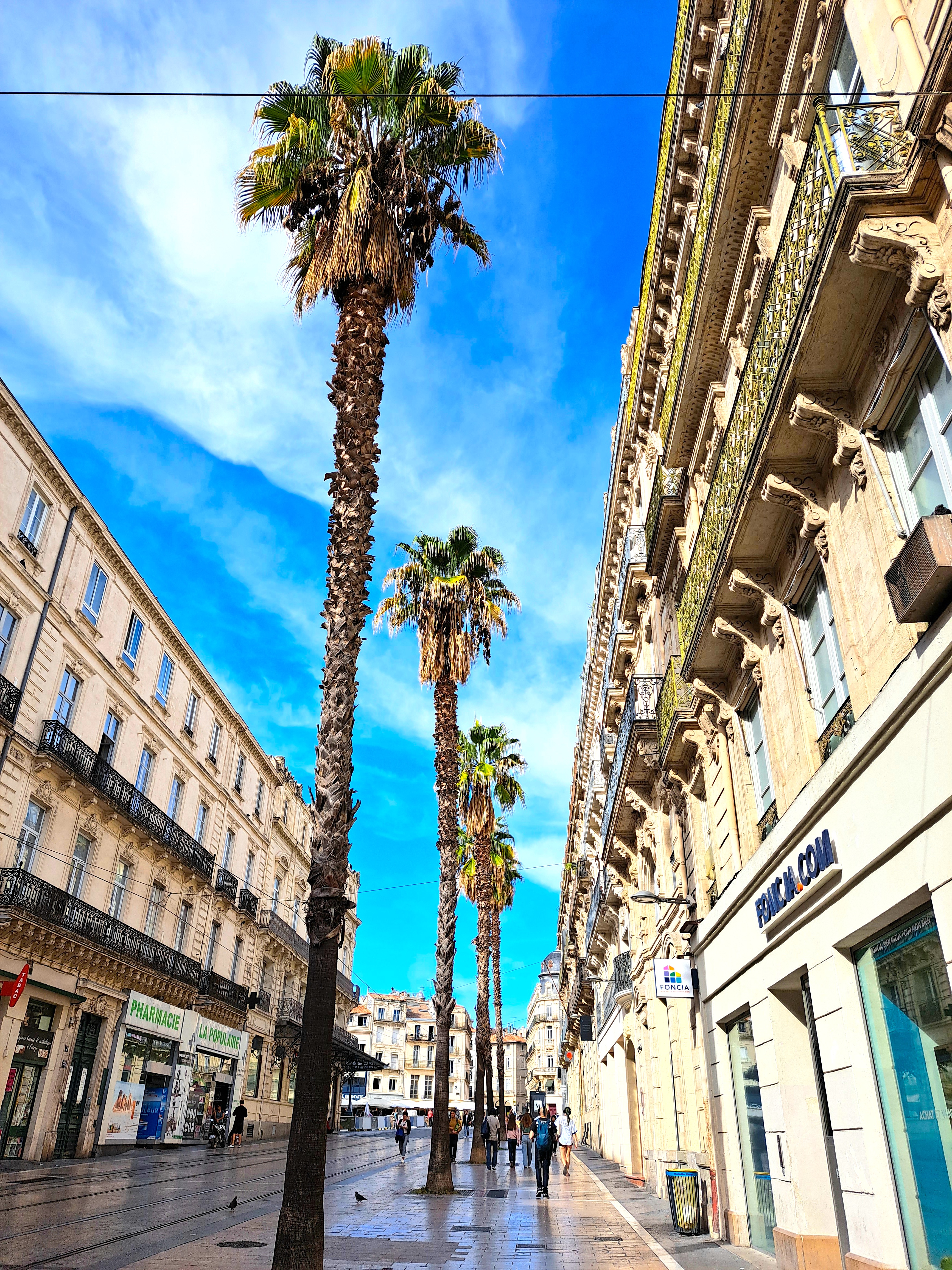
All photos by VinoDuo except bottom right, courtesy routard.com
As noted in our recent post, Languedoc is the largest wine region in France, with 23 AOPs [similar to AOC]. With just two days for winery visits, we worked with Ophorus, a local wine tourism company, and guide Alicia Koch, to narrow down our tastings to six estates within an hour of Montpellier. Alicia’s knowledge of the wines and the winemakers was invaluable. She was a delight to work with and we can’t recommend her enough.
Pic Saint-Loup

The 3,700 acre appellation takes its name from the stunning Pic Saint-Loup peak– popular with hikers and bikers before wine tasting, but not after 🙂 Close to 60 wineries and co-ops dot the Pic St.-Loup landscape. One of those estates is among our favorite of the entire trip.
[Learn more about Pic Saint-Loup ]
Château La Roque
This gorgeous estate dates back to 1259 with the brothers Jean and Guilhaume de la Roque. Almost 800 years later, the ancient Château has come into the 21st century as a certified organic and biodynamic producer. But the surroundings reflect its feudal past, from the horse-drawn plows used for some of the plots, to the 12th century stone cellar and the olive trees, herbs, and orchards that weave through the vineyards.


Longtime rock star winemaker Cyriaque Rozier and new-ish owners [2015] Sylviane and Bertrand Barascud produce just @8,000 cases a year, small even by Pic St.-Loup standards. We loved two of their white wines and multiple vintages of their flagship red, but only one is available in the US.
Château La Roque Pic Saint-Loup 2020 $26 at Vivino
70% Syrah 30% Mourvèdre; Well-crafted wine with 24 months on oak. Beautiful vanilla toast nose followed by a sucker punch of pitch- black fruits over a long silky finish.
Faugères
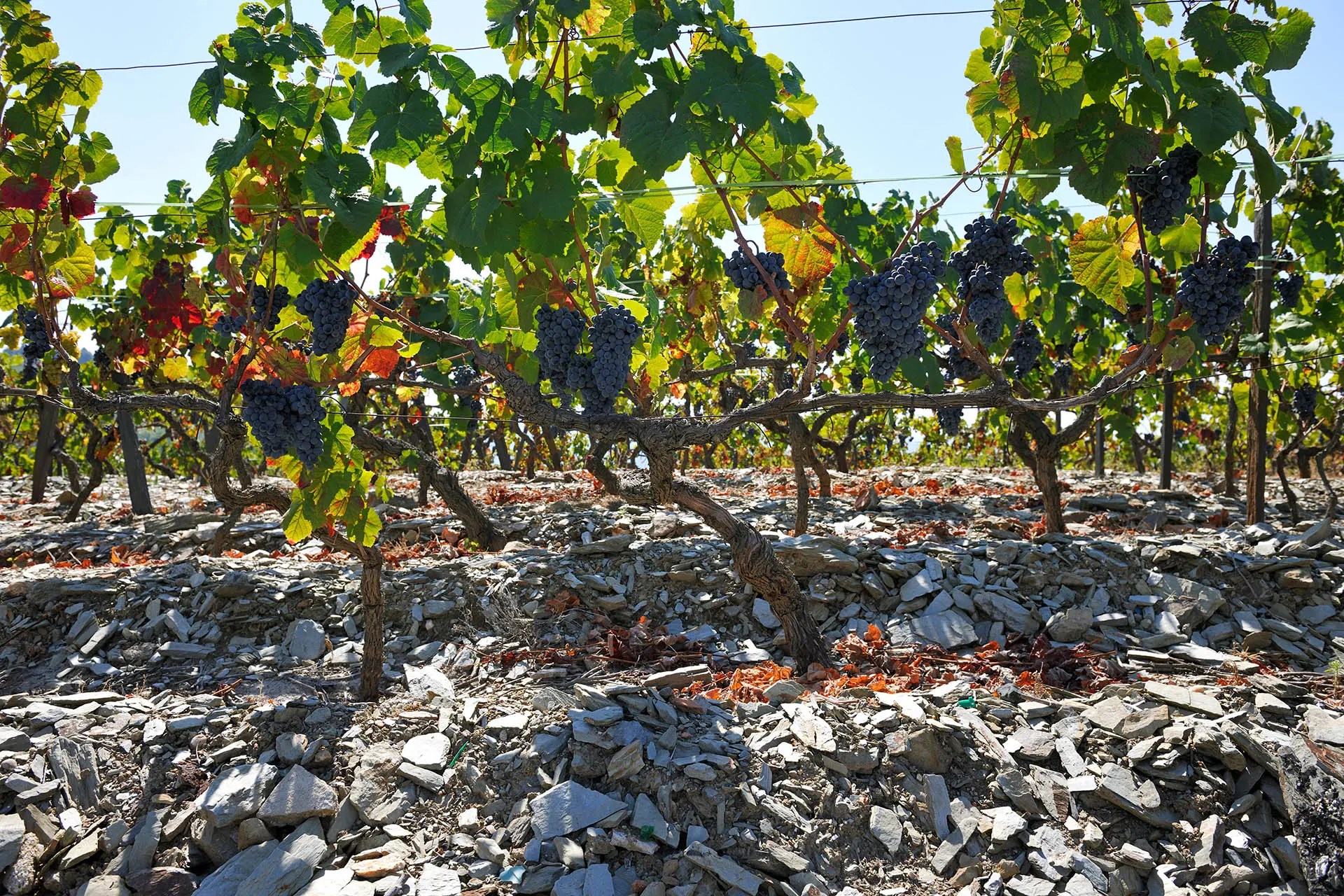
If we were vaguely familiar with the Pic St.-Loup appellation, we were clueless about Faugères, which was only created as an AOP in 1982. It’s a small region, just 13 square miles, with a handful of wineries and co-ops. But according to A Wine Story, the AOP is “one of the most highly regarded quality-wine regions in the Languedoc.” As is often the case, it all comes down to terroir.
Faugères is blessed with a Mediterranean climate and soil largely composed of schist, a “metamorphic rock, the result of excessive pressure on clay deposits during the Paleozoic Era [Source: Wikipedia]. Winemakers assign almost magical properties to the schist, which retains large amounts of water and absorbs heat during the day and releases it at night. In fact, Judging from the red, white and rosé wines we tasted at Château Estanilles and Domaine Ollier-Taillefer, the magic is real. As with our favorite wines in Pic St.-Loup, however, few of our best-loved wines from Faugerès are not sold in the US.
Château Estanilles
Estanilles has operated as a winery since 1860 but its preeminence today is due to two men, owner Julien Seydoux and Oenologist Arnaud Barthe. Under their leadership, Château Estanilles has become “one of the superstars of the region—featured in Forbes as one of five wineries to remember in the entire Languedoc.” [Source: Wine Access]
We were served seven wines during the tasting and would have bought four of them…if they shipped to the US. We particularly loved the 2022 Vallongue Rosé, a lively blend of Grenache, Mourvedre and Syrah and the silky, black-fruit heavy Sous Les Rocs Rouge 2017, which Gary likened to a “Baby Château Neuf.” It’s so frustrating to find beautiful, well-priced [under $20] wine and only have happy memories to enjoy.

Domaine Ollier Taillefer
A 93-acre estate led by the sixth generation of the Ollier family, Domaine Ollier Taillefer produces a diverse portfolio of organic wines, from snappy rosés and grassy whites to silky red blends. The winemakers are particularly proud of their schist, “formed at the end of the primary era, in Viseen between -330 and -300 million years ago.” That is some very old terroir!
During a seven-wine tasting, we especially liked the Les Collines Faugères Rosé 2022, a pale-pink four-grape blend with a perfumed nose and juicy berries on the palate and Castel Fossibus 2018, a 50% Syrah blend with notes of black current, smoke, and leather. Unfortunately, we’ll need to fly over to Langudoc to buy more of these wines. Distributors take note: These Wines Deserve Your Attention!
 VinoDuo