

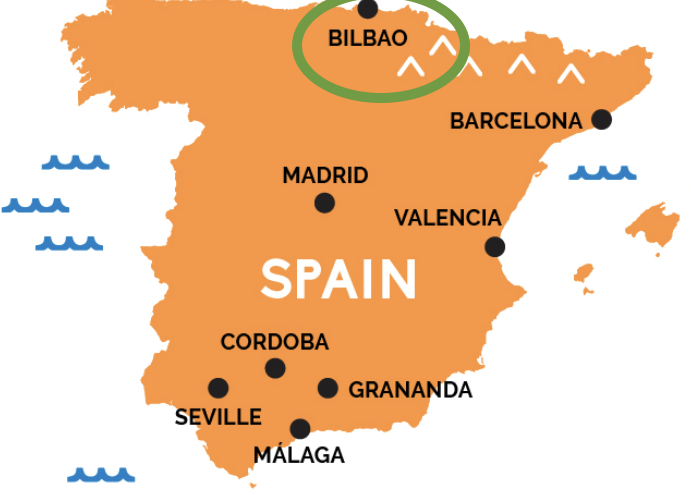
The city of Bilbao was founded by Diego López V de Haroon, a Basque Country Lord, in 1300. Situated on the banks of the Nervión estuary, which flows into the North Atlantic, Bilbao prospered for more than 600 years as an industrial port city; a critical gateway to European and transatlantic markets.
But by the 1990’s, Bilbao’s fortunes had changed. The city “had lost its former glory as a manufacturing centre: its factories shuttered, its port decrepit.” [The Guardian] Unemployment had soared to 25% and the “river environment was polluted, blighted by gridlocked traffic and crumbling warehouses.” [ArtNet] Basque government officials vowed to stop the slide and return Bilbao to its former glory, not as an industrial giant but a cultural mecca. Enter the Guggenheim.
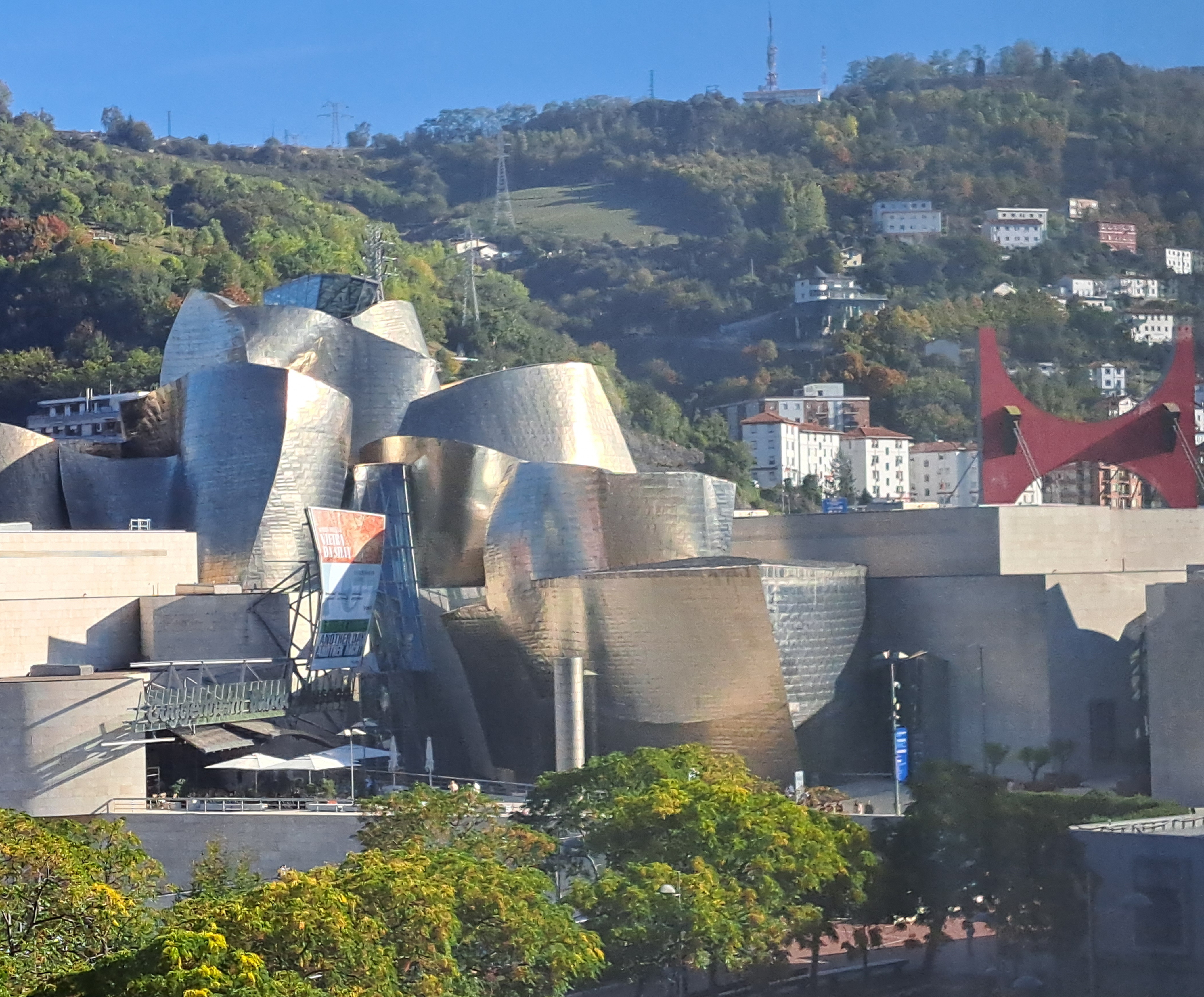
In 1991, the visionary Basque government reached out to the Guggenheim Foundation, proposing a landmark museum on the site of the old port — one of many civic projects designed to revive the ancient city. The Guggenheim, whose global ambitions were well-known, brought on starchitect Frank Gehry as an equal partner. In 1997, the museum opened and Bilbao soon became a “pilgrimage town,” per the New York TImes’ Review. In fact, Gary and Lisa looked at their own trip to the Guggenheim Bilbao as a pilgrimage of sorts, sitting high atop their “must visit” for some time.

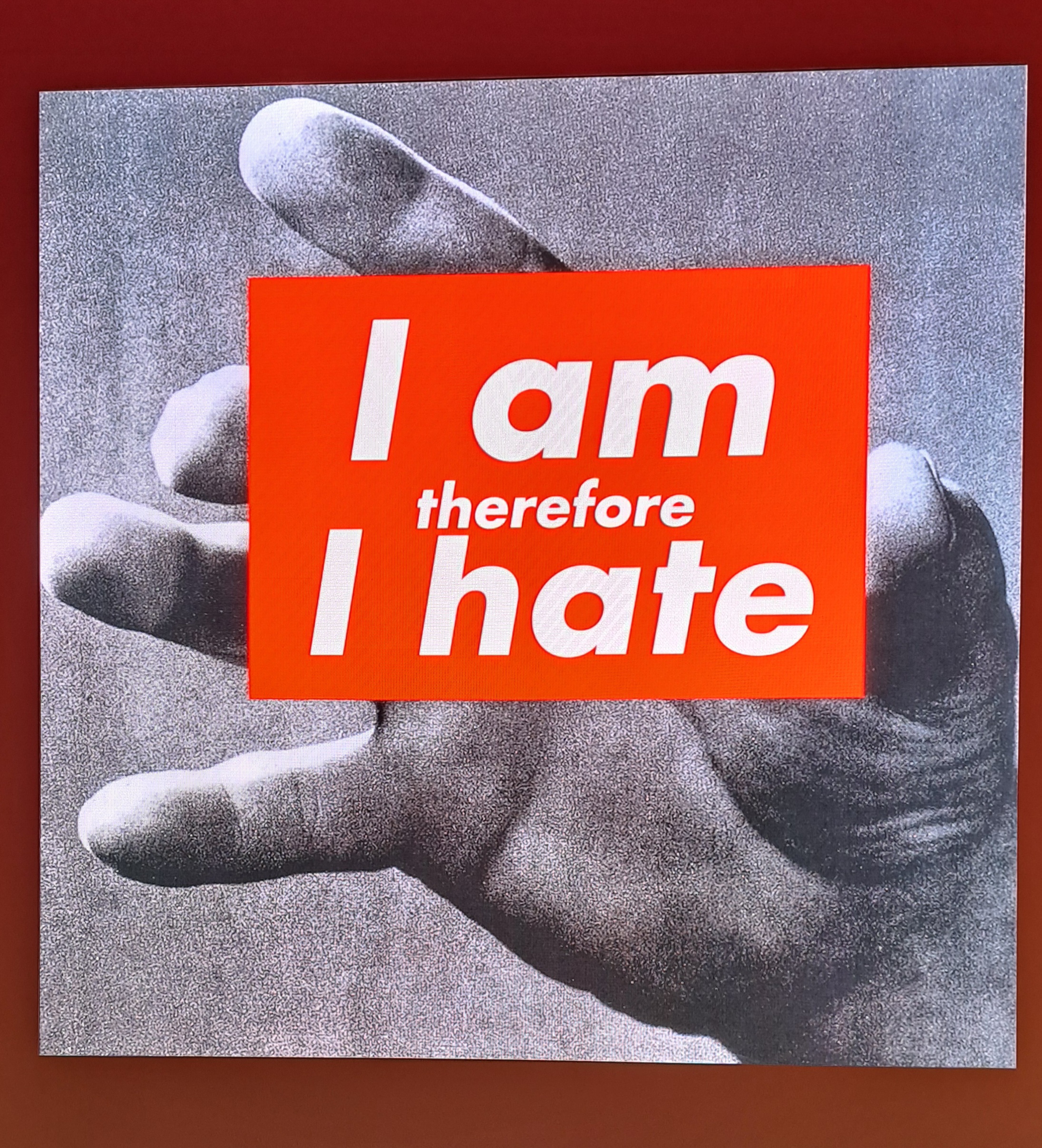


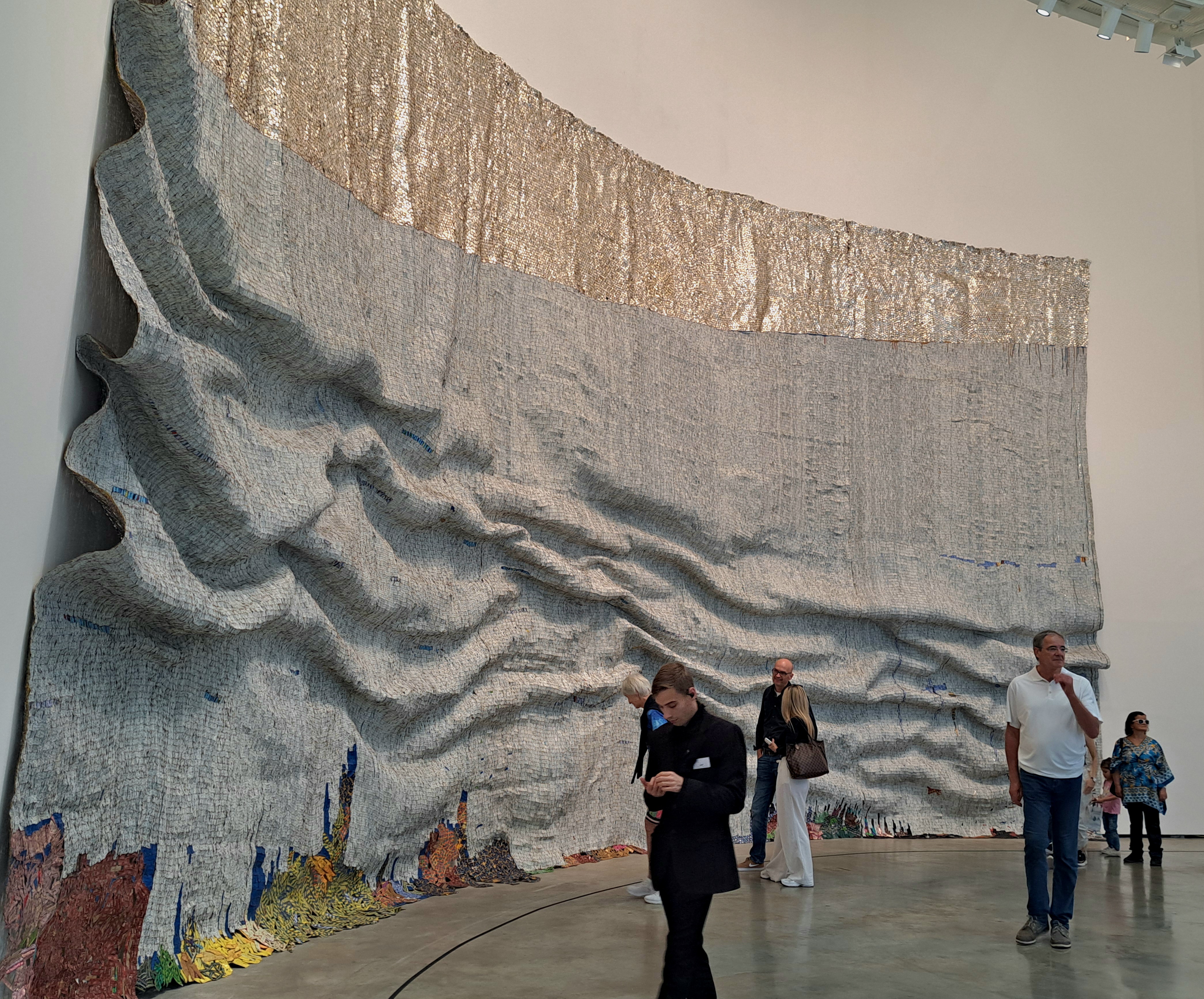
Middle row: "Torque Ellipses" Richard Serra; "Another day. Another night" Barbara Kruger;"Puppy" Jeff Koons
Bottom row: "Busted Atlas 2" Jean-Michel Basquiat; "Rising Sea," El Anatsui
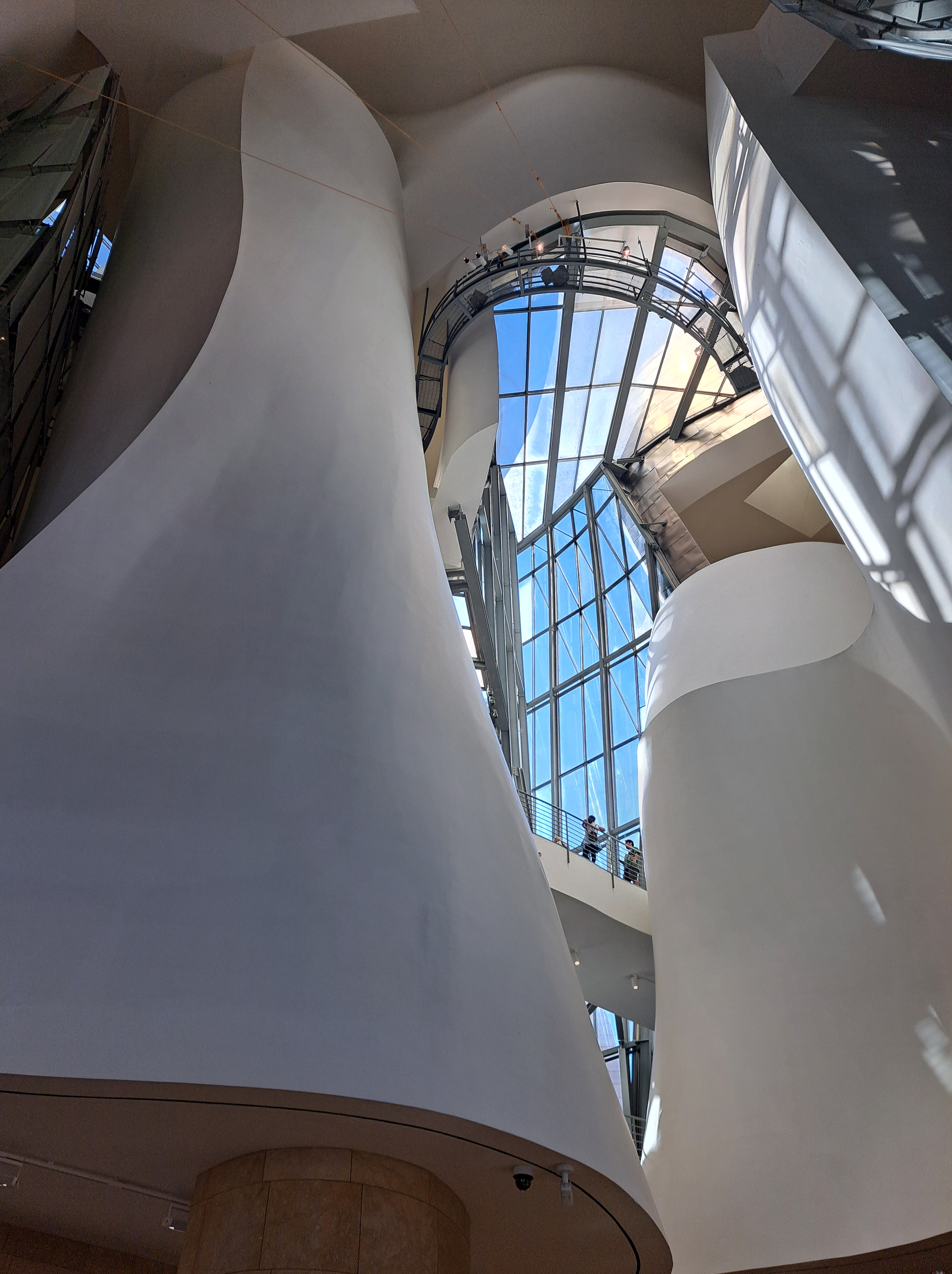
So much has been written about the museum’s breathtaking design, extraordinary collection of contemporary sculpture, and its giant impact on Bilbao, we won’t expand on that here. Suffice it to say our museum visit exceeded our already-high expectations. It’s a magnificent achievement for which the forward-thinking Basque government should be roundly applauded.
If you only come to Bilbao for the museum, you’ll be happy. But the city has much more to offer.
Bilbao: The City
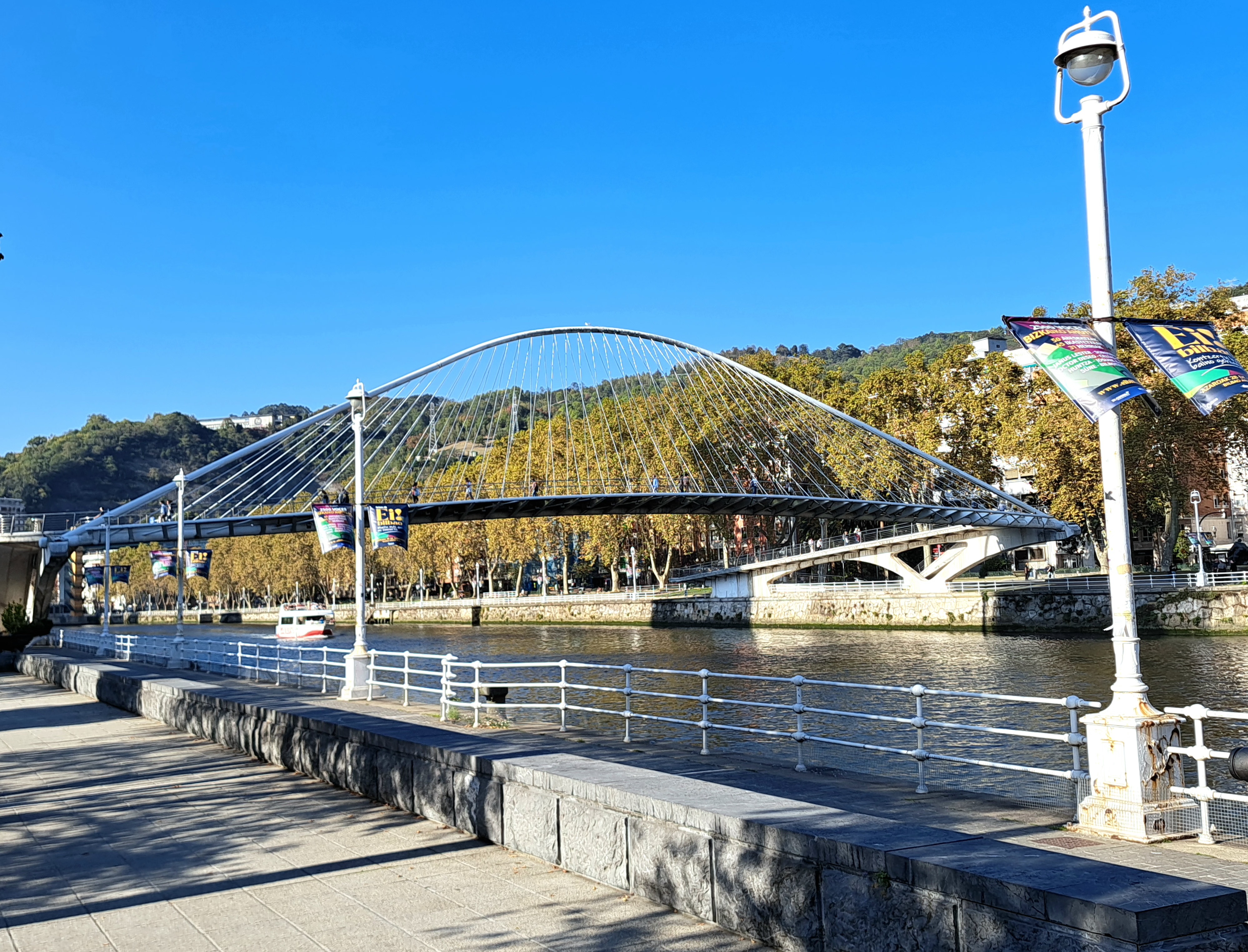
Quaint old section with rambling cobblestone streets – check! Clubs, bars, and restaurants lining pedestrian walkways – check! Pristine waterside parks for recreation and relaxation – check! In short, Bilbao has 14th century cred and a contemporary vibe. We stayed at the Hotel Miro, a stone’s throw from the Guggenheim, with museum views, an honesty bar, and sizable guest rooms. A big chunk of our time in Bilbao was spent at the museum, but we took advantage of the 70 degree weather and late sunsets to wander the streets of Old Town and the newer sections of the city. We never saw the “old,” decrepit Bilbao but the new version is young, vibrant, and full of life. Go for the art. Stay for the fun.



As for wine…there was plenty of Txakolina, the native dry white wine that’s one of Lisa’s favorites. Gary enjoyed some local Tempranillo, but none of what we tasted was worth writing about.
Next Up: Wine tasting in Priorat
 VinoDuo
Gteat place, Bilbao
That it is!