
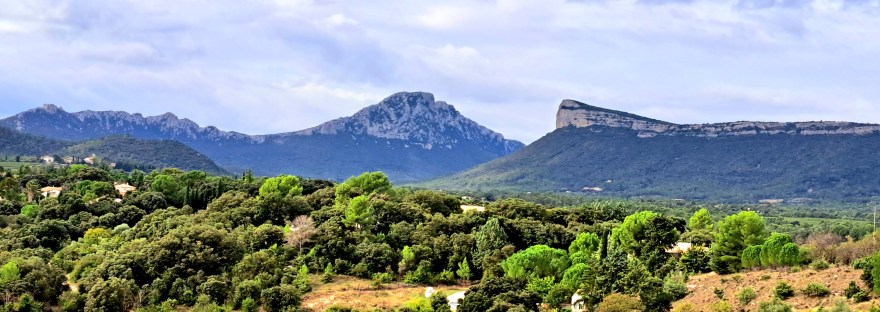
After VinoDuo’s five-day trip through several Bordeaux AOCs with our guide Frederic from Into the Vineyard we took the [extremely fast and clean] TGI train to the city of Montpellier, which would be our home base for exploring several small AOPs [Appellation d’Origine Protégée, similar to AOC] in the Languedoc-Roussillon region. Before we post our final Grande French Adventure article on Montpellier and the five nearby wineries we visited, we thought a brief primer on Languedoc would be useful.

When we told folks we were going to Languedoc, the most common question we got was, “Where’s that?”
Languedoc, huh?
Languedoc-Roussillon is in the South of France and is the country’s largest wine region, meandering along the Mediterranean Sea from Provence to the Pyrenees Mountains and the border with Spain. The wine-producing area spans 300,000 hectares/750,000 miles with 23 AOPs, 2,000 wine producers, 80 co-ops and 450 private winemakers. Roughly one-third of all French wines are produced here. [Source: American Wine School]. Languedoc is also the largest producer of organic wines in France.
A Diverse Wine Region
The region covers 150 miles of Mediterranean coastline and the terrain varies widely, from rolling hills to picturesque valleys to steep mountainsides and the area encompasses seven different climate zones.
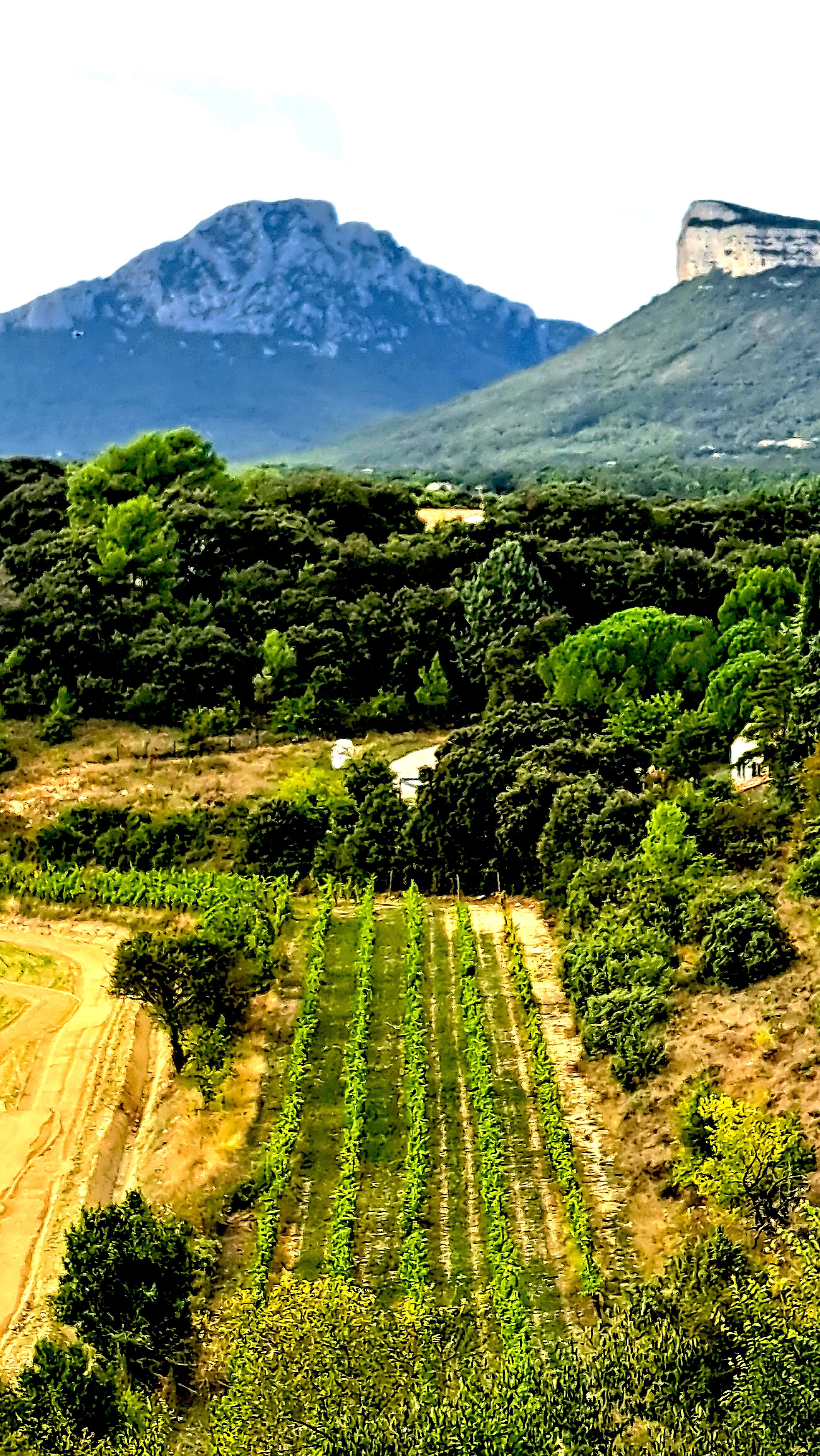


Three of the terroirs found in Languedoc including Pic Saint-Loup (far left)
Terroir plays a central role in the winemaking process and estates in Languedoc boast different soil types including volcanic schist, clay/gravel, and limestone. Each soil type produces different flavors when paired within the representative grapes of the region: Syrah, Grenache, Mourvedre, Cinsault, Vermentino, Macabeo, Folle Blanche (Pic Poul Blanc), Bourboulenc, and Clairette Blanche. One of the wineries we visited, Chateau Estanilles in Faugères featured volcanic fossilized schist-based soils that produced amazing flavors in their red wines that rival the best Rhone and Châteauneuf-du-Pape wines from further north.
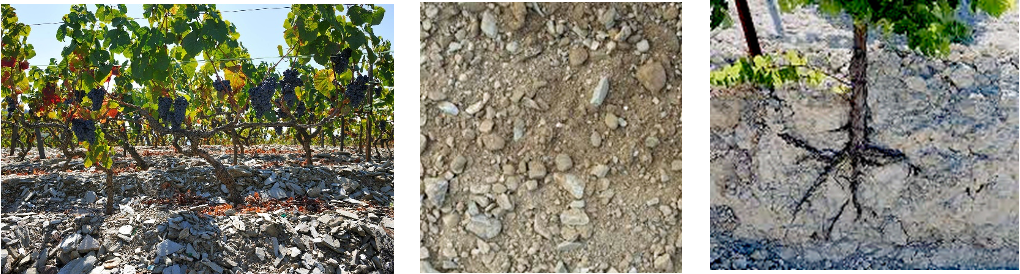
Soil types found in Languedoc, from left: Schist [credit Wineenthusast.com], Clay-Gravel, and Limestone are the most prevalent.
Great Value, Great Wine, No Respect
So if Languedoc is France’s largest wine-producing region, with beautiful terroir and some excellent wine, why is it so hard to find the region’s wine in US shops, large and small? We visited respected purveyors in Boston and Manhattan looking for wines from any of the AOPs, and none had more than one or two bottles. We walked the aisles of wine superstore Total Wine and found sections for the Rhone, Châteauneuf-du-Pape, Beaujolais, Burgundy, and Provence. No Languedoc.
Why? Languedoc has a bad reputation. As Forbes magazine bluntly put it in 2015 “Once a source only for cheap bulk wine…and not being one of France’s prestigious wine regions,” Languedoc gets no respect. And in 2018, renowned author Mike Veseth from the Wine Economist acknowledged that the perception of Languedoc as a “cheap French wine lake” (ouch!) was preventing the region from rising above a now-outdated stereotype. Its long history of producing mediocre wine for the masses took the region out of the “must buy” column for wholesalers, brokers, retailers, and restaurateurs. But that is slowly changing.

In the last 10–15 years, winemakers in the region have flipped their mantra from quantity to quality. New owners, many from other parts of Europe, the UK, and the US, have invested big money in equipment, switched to organic and bio-dynamic processes, and hired top winemakers and vineyard managers to improve their portfolio. The industry is starting to take notice of the “New” Languedoc, and that includes VinoDuo.
At the wineries we visited in the AOPs of Pic St.-Loup, Faugères, Coteaux du Languedoc, and Pezenas we tasted wine that could easily compete with some of the best Rhone and Châteauneuf-du-Pape wines on the market today. [Like those two wine regions, the dominant red wine grapes in Languedoc are Grenache-Syrah-Mouvèdre or GSM] They were as far from commodity wines as you can get; there was no ‘wine-lake’ there.
Below, from left: Domaine Ollier-Taillefer; Château La Roque; Château Lancyre


In a good news/bad news situation, the low reputation of Languedoc’s wine leads to prices far lower than those in other regions. For example, the three wines available in the U.S. [below] sell for under $30. Compare that to the $50-$100 price tags on well-known Rhone wines and you’ll understand the value of many Languedoc offerings.
Available Wines From Languedoc Tastings
The biggest challenge we faced in Languedoc wasn’t finding wines we liked…it was finding wines that are sold in the U.S. Until the big distributors decide wines from Languedoc are worth their attention, it will be a frustrating treasure hunt for many excellent, under-appreciated wines.
| Winery | Wine | Notes | Price + Ratings* |
|---|---|---|---|
| Domaine Ollier Taillefer Faugères | Allegro Blanc 2021 50% Roussanne 50% Vermentino | Beautiful nose. Perfect blend of honey and limestone; some kiwi and blueberry notes | $26 at Plumpjack Wines 90 points QPR = .28 VinoDuo Must-Buy |
| Chateau De Lancyre Pic St.-Loup | Vielles Vignes Pic Saint-Loup 2020 65% Syrah 35% Grenache | Toasty vanilla-white pepper on the nose, spicy black fruits on the palate with smooth tannins. Not aged on oak. Perfect for grilled meats. | $16 + shipping at Viscount Wines and Liquor-Dist. By DB Wine 90 Points QPR = 0.17 VinoDuo Must-Buy |
| Chateau des Estanilles Faugères | Clos du Fou 2019 95% Syrah 5% Grenache | Smoky leather tannery nose with cassis licorice on the palate. Smooth and ready for your next barbeque. Gives Châteauneuf-du-Pape a run for its price-tag! | $21 Sadly, not available in the US 93 Points QPR= 0.25 VinoDuo Must-Buy [if only we could!] |
* Ratings Reference
Points – Aggregate rating from professional wine reviewers
QPR – VinoDuo’s custom rating of best value/best price – the lower the better
Buy/Must Buy – VinoDuo’s recommendation
Next Up: The conclusion of our Grande French Adventure
 VinoDuo