
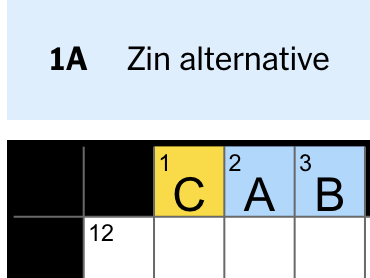
On May 2, 2024 the 1 Across clue in the NYT crossword puzzle was: “Zin alternative.” Lisa is both a puzzle nut and a Zin devotee, so the obvious three-letter answer was “Cab.” But our Napa Cab-loving friends would scoff at Zinfandel being a simple swap for their beloved Cabernet Sauvignon. True, they’re both red varietals. But the similarity stops there.
According to California wine seller McCLain Cellars, Zinfandel is known for its “bold and fruity flavor profile” with common descriptions including notes of “blackberry, raspberry, and plum, as well as a hint of spice.” Cabernet, on the other hand, “is known for its more complex flavor profile. It often has notes of black currant, black cherry, and cedar, as well as a hint of vanilla. It is also known for being more tannic than Zinfandel, which can give it a more ‘structured’ mouthfeel.”

Gary and Lisa enjoy California Cabs [mostly from Napa] and Zinfandel from all over. After a recent visit to Temecula [CA], where we sampled a couple of luscious Zins, it seemed time to check in on some recent releases from two premier Zin-growing regions, Sonoma and Paso Robles.
The Tasting
We invited four Napa Cab devotees to join us for a casual tasting of five Zins from the 2019 – 2022 vintages, all of which were $27 or less. VinoDuo was most familiar with Seghesio [visited in 2012] and Cline [our first Zin love affair!] The others were recommended by trusted wine sellers at local shops.
- Midnight Cellars, Paso Robles
Estate Zinfandel 2019 $27 - Gehricke Wines, Sonoma
Russian River Valley 2022 $26 - Cline Cellars, Sonoma
Eight Spur Zinfandel 2021 $25 - Brady Vineyard, Paso Robles
Zinfandel 2019 $20 - Seghesio Vineyards, Sonoma Zinfandel 2021 $27
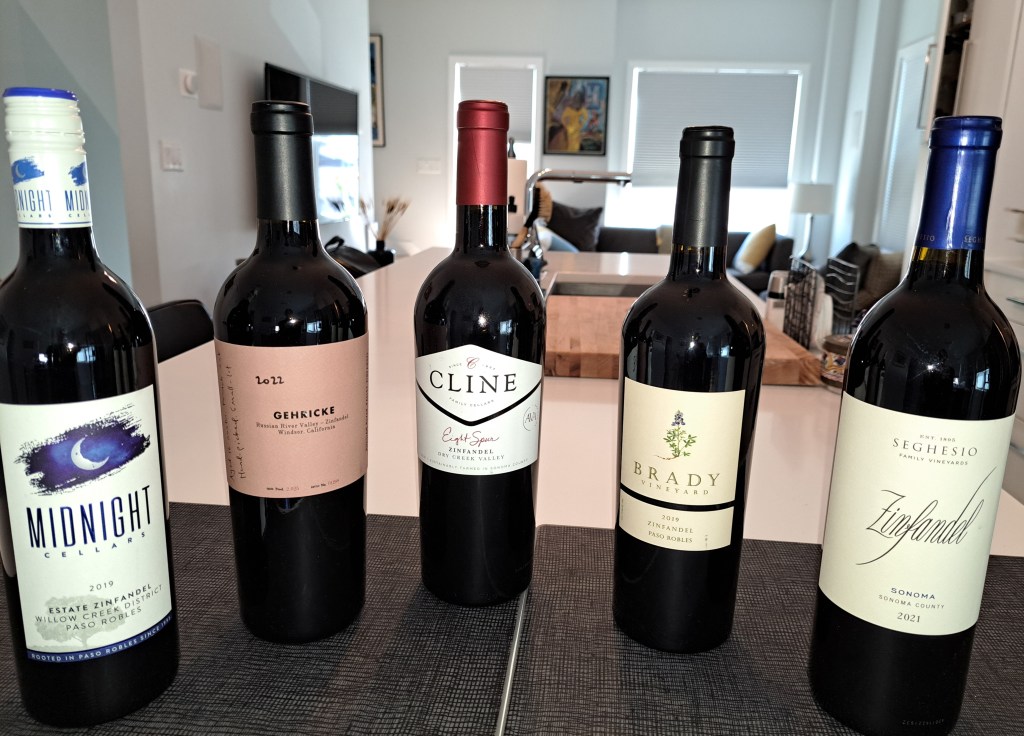
Note: These were high-alcohol wines, ranging from 14.0% for Cline to 15.8 [!] for Midnight Cellars. Alcohol levels [Alcohol By Volume or ABV] across all varietals have been creeping up from the 11-13% range, and Zinfandel wines have usually topped the scales at 14%+ thanks to longer ripening times and fuller-bodied profiles. But 15.8?
The Top Three
Gary and Lisa were rooting for the smaller wineries to dominate the tasting but, when all the reviews were in, wines from two prominent producers were the favorites, with boutique brand Gehricke placing third.
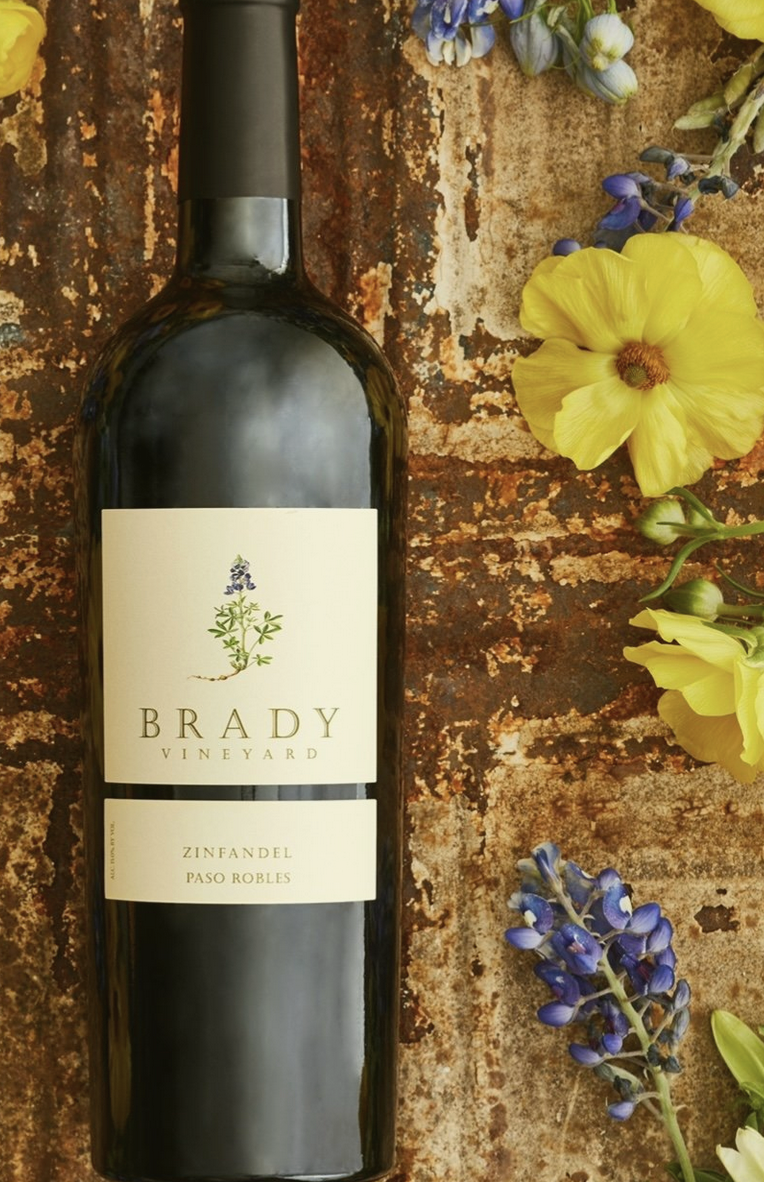
- Brady Vineyards’ 2019 Zinfandel from Paso Robles was the clear favorite, with a 4.7 rating. Our friends found it “super smooth” and smoky, with notes of black currants and raspberries, with tight tannins and a long finish. The wine was “amazing” when paired with dark chocolate – best in show. Founded in 2001 by big-time winemaker Don Brady [late of Robert Hall Winery,] the wineryis one of Paso’s best, with highly-rated Cabs, Pinots, Zin and Cab Franc. 15% ABV
- Cline’s Eight Spur 2019, from the Dry Creek Valley appellation of Sonoma, finished second, with a 4.1 rating. A “crowd pleaser” with deep dark fruit, lots of cherry notes, some warm spices, smooth tannins, and a long finish. The Cline family started the winery in 1982 and while it produces a wide range of white and red wines, Cline has found its sweet-spot with well-priced California Zin. 14.5% ABV
- Gehricke’s 2022 Russian River Valley Zinfandel [with 15% Petite Sirah], rounded out the top three wines with a 3.9 rating. The dominant word our tasters used was “Smooth,” full-bodied, and “bursting with dark fruit, some vanilla, and slight pepper on the palate.” Fruit forward with “little complexity.” Gehricke is a boutique brand from August Sebastiani, a 4th generation vintner from the famed winemaking family. So while it’s a small-batch producer, the family’s pedigree gives Gehricke a big leg up. 14.9% ABV
So did we convince our Napa Cab devotees to consider California Zin when they’re shopping for wine? Not really. And was the NYT Crossword Puzzle wrong to consider Cab a Zin alternative? It depends on what you’re eating, what you want to spend, who you’re dining with, and how picky you are. VinoDuo is agnostic: we love both varietals, choose them to pair with specific food and guests, and enjoy introducing new wines to old Cab drinkers.
 VinoDuo