
We interrupt our Grande French Adventure Series to Consider Cost, Quality, and the Correlation Between them in the Wines of Bordeaux.

While wandering through the wine shops and vineyards of Saint-Émilion, Saint-Julien, Médoc, Pomerol, and Pessac-Léognan we noticed significant pricing disparities for seemingly similar wines. In Saint Émilion we wondered why the flagship wine’s best vintages from Château La Gaffeliere cost almost twice as much as those from Château de Ferrand and Château Fombrauge. In Saint-Julien, we had similar thoughts about the top wine from Château Brenaire-Ducru, which cost less than the top offerings from Château Lagrange, Château Talbot, and Château Leoville-Poyferre. We loved most of these Estates’ wines. So, what separates the Gaffeliere from Ferrand? Is their wine that much better? Or is it the hype of a Wine Spectator 95+ review? Lower operating costs? Better marketing? Before answering these questions, we needed to first understand why Bordeaux wines, as a class, command higher prices.
Making Wine Doesn’t Come Cheap
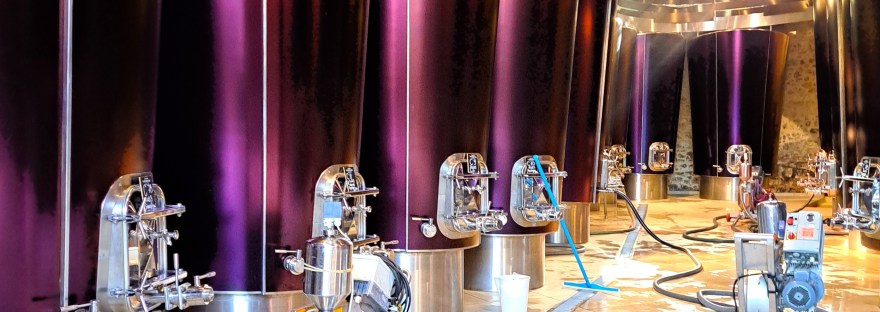
During our winery visits we interviewed vineyard managers, winemakers, and owners. We learned more about soil properties, barrel toast levels, steel vs. concrete tanks, hand vs. machine harvesting, and the difference between steel tanks and clay amphoras than we ever thought possible. We always knew that winemaking was a laborious process, but we saw first-hand the exorbitant fixed costs associated with growing, picking, sorting, de-stemming, storing, pumping, aging, blending, bottling, and marketing quality wine.
Terroir is Just the Beginning
In winemaking, you work with the soils and grapes that you’re dealt. Winemakers need to assess how to pair one plot’s soil—limestone, granite, clay, schist, loam, sand—with the right vines [varietal, age], elevation, sun, humidity, and irrigation requirements—to coax the grapes into working their magic. Then multiply by 24, or 57, or 100—that’s the number of plots at Château Fombrauge, Château Leoville-Poyferre, and Château Talbot, respectively.

Terroir: Whether the soil within a Château’s plots presents loam-clay-pebbles, or limestone-granite-clay, or some combination of these ingredients, the winery must determine what grapes grow best within the soils they have and how to best get at the groundwater below. Some wineries plant deep-rooted olive trees nearby to break up the hard clay below to release the trapped moisture as irrigation is not allowed.
The late Mike Grgich (of Grgich Hills Winery and Château Montelena fame) told Terry Robards in a 1981 New York Times interview, “I’m not calling myself a winemaker anymore, I’m a wine sitter. I sit with the wine and see what it needs.” For the best winemakers, this can mean up to 18 months of finagling with blends, barrels, rackings, and clarifications to arrive at the best product you can make with the raw materials nature gives you.
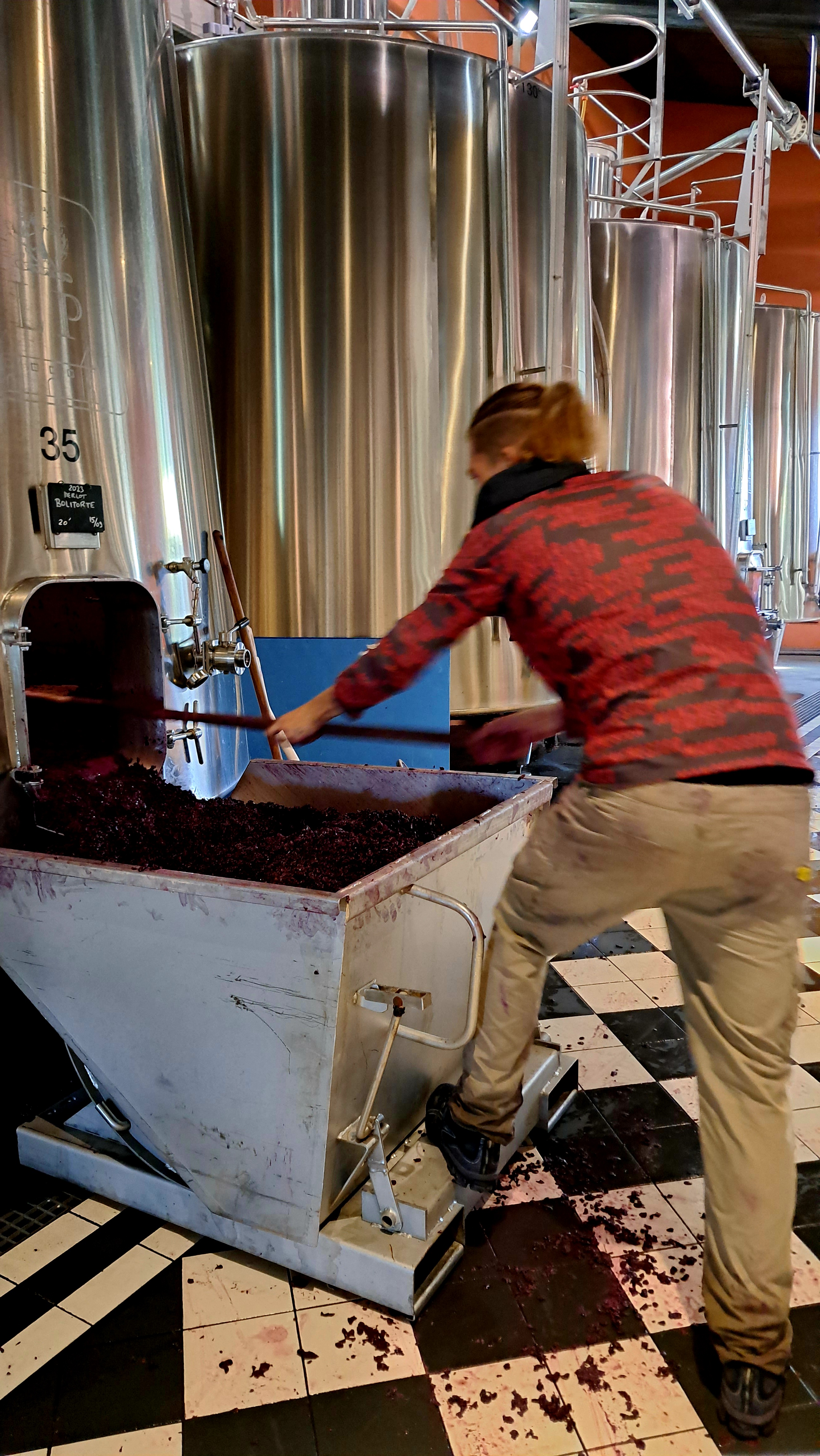
Labor costs vary from Château to Château and the competition in Western Europe is fierce. Wineries must pay top-Euro to get the best pickers, rackers, and winemakers. Estates usually replace 1/3 of their barrels each year. In a place like Château Talbot, that’s something like 500 barrels a year at $1,500 a pop, or $750,000 every year just for barrels.
When your prized possession sits in a tank, a barrel, and a bottle for 12 – 24 months, the carrying costs are huge. Add in marketing, shipping, distributor cuts, and retailer profits and the cost of a bottle of wine ends up with a mark-up close to 100 percent.
That’s why good wine costs more!
But Does More Expensive Wine = Better Wine?
We wanted to get to the bottom of the pricing disparities, so we put on our detective hats, reviewed our winemaker interview notes, crunched some numbers, and, of course, tasted some more wine. Ultimately, we decided the best way to resolve the cost/quality conundrum was to create our own Quality-Price Ratio [QPR,] a wine rating used by other writers, but one whose variables swing wildly from reviewer to reviewer. We took the common 100-point rating scale [thanks, Robert Parker] and divided it by a wine’s average retail price to mathematically decipher “is this wine worth it?”
EXAMPLE: VinoDuo’s QPR [the lower the score, the better]
Average retail price ➗ Average reviewers’ rating = VinoDuo QPR
Château de Ferrand 2015 $43 ➗ 90 = .48 QPR [the winner]
79% Merlot, 11% Cab. Franc, 10% Cab. Sauv
Château La Gaffeliere 2015 $110 ➗ 93.5 = 1.18 QPR
70% Merlot, 30% Cab Franc
Our QPR scoring system is like golf; you want the lowest score. In the example above of two excellent 2015 flagship wines from St.-Émilion, the $43 Château de Ferrand Grand Cru Classé is a better value [.48 vs 1.18 QPR] than the $110 Château La Gaffeliere. That’s a $30 difference.
On the two charts, below we’ve compared four wines from St.-Émilion against one another and four wines from St.-Julien. The “Production” column was an attempt to find a correlation between how complex/complicated the winery’s process is with the prices they charge. We did not find that exact correlation. The last column in the chart includes VinoDuo’s “Buy” ratings, professional wine reviewer ratings, and our VinoDuo QPR.
We’re happy to report that our ratings pretty much gel with the professionals and that the winners weren’t the most expensive wines within the two AOCs we evaluated.
The VinoDuo QPR Winners
- Saint-Émilion – Our champion was the $40 Château Leydet Valentin (QPR 0.44) who edged out the $43 Château de Ferrand (QPR 0.48)
- Saint-Julien – The competition was just as tight with the $100 Château Brenaire-Ducru (QPR 1.08) edging out the $121 Château LaGrange (QPR 1.32) for the win.

We hope we’ve proved that you don’t need to spend a huge chunk of your paycheck to get a decent, food-friendly Grand Cru Bordeaux wine. So, take it from your friends at VinoDuo…get out there and experiment. Go to the bargain bin and maybe you’ll find a beautiful, under-appreciated Grand Cru or Grand Cru Classé. Right now, we’re enjoying Bordeaux wines that take us back to the warm fall days filled with the scents and sounds of the vineyards and wineries and joyful reminiscences of meeting our new-found friends in Bordeaux. And yes, that’s priceless.
Note: Our Average Reviewers’ Rating variable come from WineSearcher.com (consolidator of multiple rating resources-Wine Spectator, Wine Enthusiast, Vinum, Wine Advocate, etc.). We also got Average Retail Prices from WineSearcher.com and from local shops in Massachusetts.
Next Up: Montpellier, Pic. St.-Loup, and Faugères – The final installment of our Grande French Adventure series
 VinoDuo
So does Charles Shaw Merlot ($5, 80 rating, according to WineSearcher) beat all of these, since it has a QPR of 0.06? Asking for a friend.
I guess there needs to be some sort of additional filter (e.g. we only consider wines with ratings of X or higher – maybe set X at 90?) to avoid the conclusion that “two buck Chuck” is the best value for money. And I don’t know where they got $5 – last I saw it was less than that, but maybe inflation…
Excellent question, oh favorite reader! We generally set 85-88 as the “floor” for assessing cost/quality. But we have certainly had many a wine from Trader Joe’s [home of 5 buck Chuck], including Lisa’s favorite white, Espiral Vinho Verde for $4.99! So drink what you like and use our comments as a guide, not the bible.